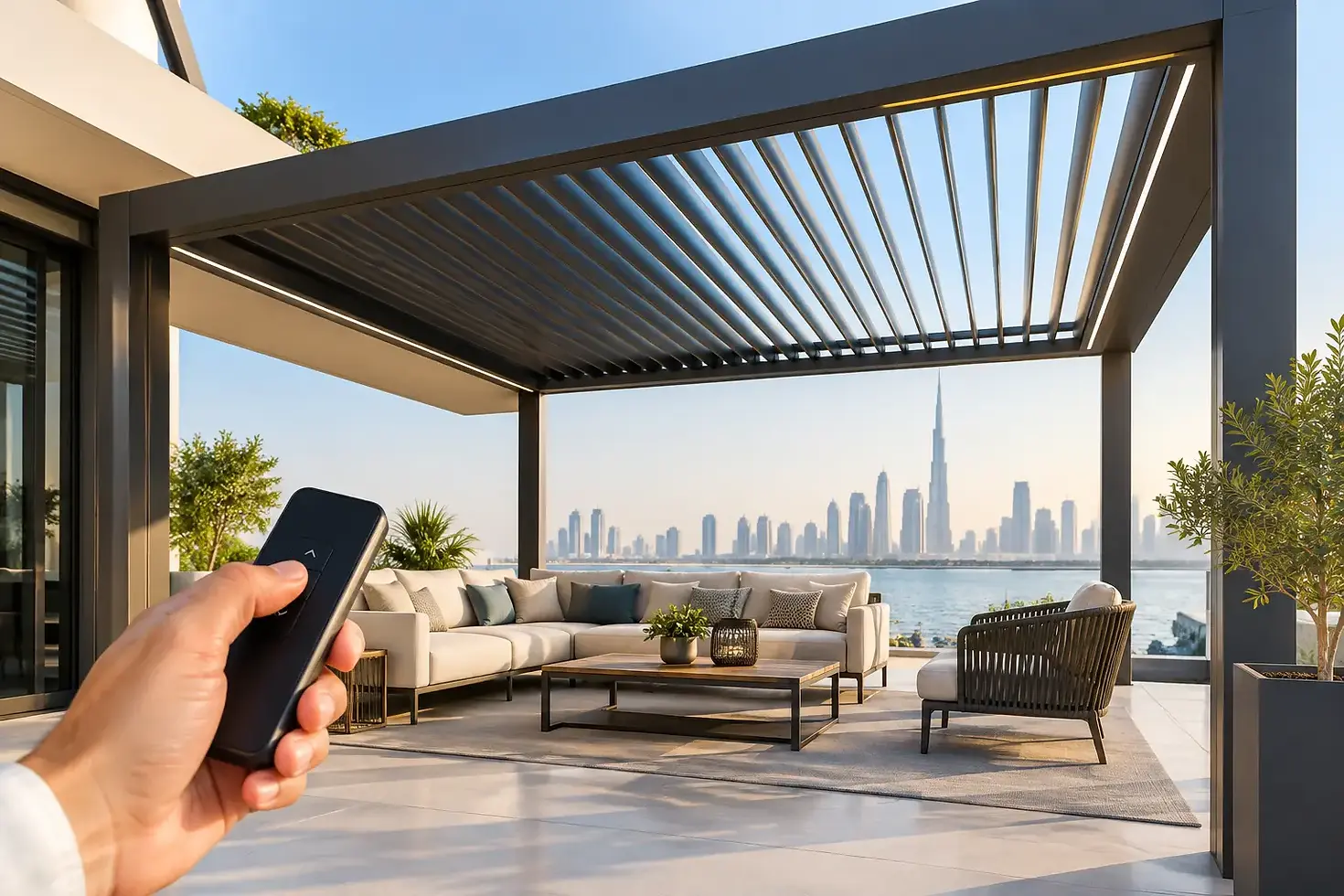
Motorised Roof Controls for Dubai Pergolas

A pergola roof should not force your family to choose between full sun and complete enclosure. At lunchtime, you may want shade over the dining table; later, a little open sky and moving air can make the same space feel completely different. Well-specified motorised roof controls turn that adjustment into a simple, reliable part of daily outdoor living.
For Dubai villa owners, the controls are not an afterthought. They influence how comfortably the pergola works in strong sun, sudden rain, warm evenings and changing wind conditions. They also affect the appearance of the finished space: a refined outdoor room should feel effortless to use, whether you are hosting a barbecue, enjoying breakfast with the family or closing up before leaving for the weekend.
What motorised roof controls actually do
Motorised roof controls operate the moving elements of a pergola roof, usually through a wall-mounted switch, remote handset or smart-home interface. Depending on the roof design, this may mean rotating aluminium louvres, retracting a fabric roof, or sliding roof panels into position.
The key benefit is control over light, shade and ventilation without manual cranks, loose cords or repeated physical effort. On a bioclimatic louvred pergola, the blades can be tilted to soften direct sunlight while allowing hot air to rise away. When rain begins, they can close to form a weather-protective roof, directing water towards integrated gutters and downpipes. A retractable roof creates a different experience, opening back more fully when you want uninterrupted sky above the terrace.
Neither option is automatically better. Fixed-frame louvred roofs suit homeowners who want measured light control, a crisp architectural finish and dependable rain protection. Retractable systems are particularly appealing where the ability to open a large section of roof is central to the brief. The right choice depends on the orientation of the property, the intended use of the area and the level of enclosure you want around it.
Why the control system matters in Dubai
A motor and remote may look like a small specification beside an aluminium structure, but the equipment must perform in demanding conditions. Dubai’s heat, airborne dust, intense UV exposure and occasional wind-driven rain all place pressure on materials and moving components.
A properly designed system starts with an aluminium pergola engineered for the span, fixing points and local weather exposure of the site. The motorised mechanism then needs to be matched to the roof weight and movement, protected within the structure where possible, and installed with neat, safe electrical connections. Poorly matched components can lead to uneven movement, unnecessary strain or a roof that becomes inconvenient precisely when it is needed most.
Controls should also be intuitive. A homeowner should be able to open, close or adjust the roof in seconds, without needing to remember a complicated sequence. For family homes, a clearly positioned wall switch provides reassuring day-to-day access, while a remote or app-based option adds convenience from indoors or around the garden.
Sensors bring an extra layer of reassurance
Automated sensors can make motorised roof controls more responsive to the weather. A rain sensor can close a compatible roof when rain is detected, helping to protect outdoor furniture, cushions and dining areas if you are not nearby. Wind sensors may be appropriate for certain retractable systems, where opening or closing positions need to respond to higher wind conditions.
Automation should be selected carefully rather than added simply because it is available. Sensor settings must reflect the specific roof system, the exposure of the villa and how the area is used. A sheltered courtyard has different requirements from a rooftop terrace or an open garden beside the coast. The objective is practical protection, not unnecessary complexity.
Choose controls around how you use the space
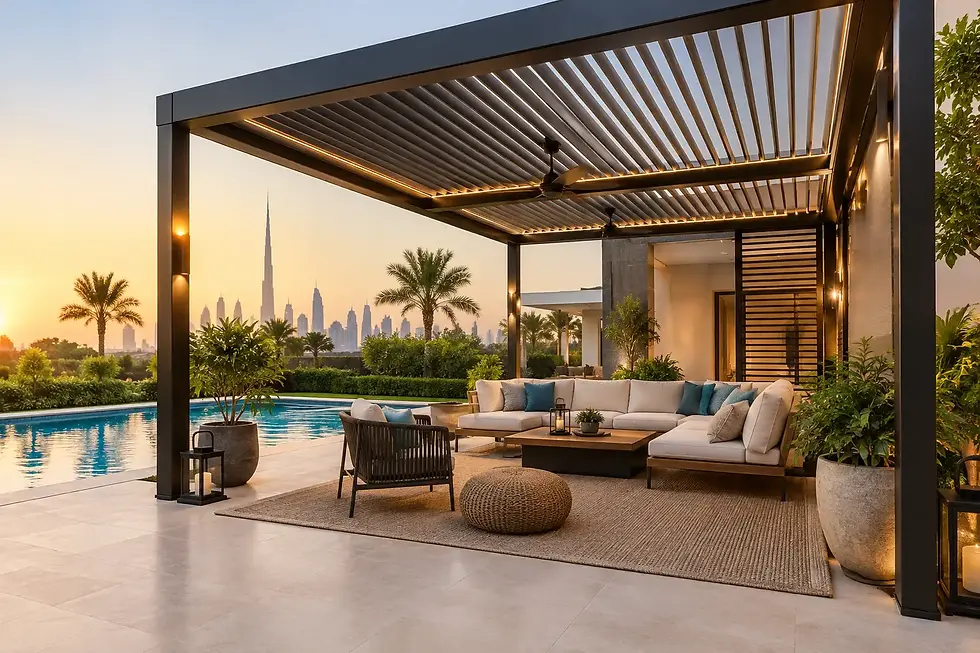
The most successful pergola projects begin with real routines. A family that uses the patio for school-day breakfasts, afternoon play and evening dining needs flexibility across the day. A homeowner who mainly entertains at night may prioritise integrated lighting scenes, zip blinds and glass doors alongside roof operation. For a poolside pergola, shade adjustment and airflow may be more important than full enclosure.
This is why roof controls should be discussed alongside the whole outdoor-living design, not at the end of the installation. The position of the kitchen, the direction of the prevailing sun, the location of seating and the view from inside the house all shape the best control arrangement.
A considered specification may include a wall switch near the patio doors for everyday use, a handheld remote for convenience, and smart controls for selected functions. If lighting, blinds and misting are being added, placing them within one coordinated system can make the space easier to enjoy. It also avoids a collection of unrelated remotes and switches that undermine an otherwise polished design.
Integrating the roof with blinds, glazing and cooling
Motorised roof controls deliver the strongest result when they are part of a complete outdoor room. A roof alone provides overhead shade, but low-angle sun, glare and privacy can still affect comfort. Motorised zip blinds can reduce sun from the sides and create a more sheltered setting for dining or relaxing. Sliding glass doors offer a more enclosed option while retaining garden views and bringing greater protection during dusty or humid periods.
Cooling should be planned with equal care. Misting and fogging systems can improve comfort in suitable outdoor areas, particularly when paired with shade and good airflow. The roof position matters here. Closing every element tightly on a hot afternoon may reduce direct sun, but some opening or ventilation can be preferable depending on the layout and cooling approach.
Lighting also deserves early attention. Integrated LED lighting can transform a pergola after sunset, but it needs to work with roof movement, electrical routing and the desired ambience. Warm, carefully placed light over a dining table feels very different from bright general illumination across the whole terrace. Controls can be programmed simply, allowing the roof and lighting to be adjusted for dinner, entertaining or a quiet evening outdoors.
Details worth confirming before installation
Before approving a motorised pergola, ask how the controls will be powered, where switches and control units will sit, and how cables will be concealed. These details should be resolved during the survey and design stage, not improvised once the structure is in place.
It is also sensible to confirm what happens during a power cut. Some systems include manual override options, while others may remain in their last position until power returns. The best answer depends on the product and roof type, but it should be clear before installation.
Maintenance requirements are usually modest when quality components are correctly installed, yet they should not be ignored. Periodic cleaning of roof channels, checking drainage outlets and keeping moving areas free from accumulated dust help the system operate as intended. If the pergola includes fabric, blinds or glazing, each element has its own care considerations. A professional installer should explain these clearly and provide a straightforward handover once the work is complete.
Design confidence comes from proper planning
The appeal of a motorised roof is immediate, but reliable performance begins long before the first button is pressed. Accurate site measurements, suitable structural fixing, considered drainage, electrical planning and a roof system designed for the UAE climate all matter. A beautifully finished pergola should look like a natural extension of the villa, while quietly handling the practical demands of the weather.
At Euro Pergola Studio, this means treating controls as part of the complete design conversation. A free site survey allows the team to assess sun direction, available space, access, existing finishes and the accessories that will make the outdoor area genuinely useful. From there, homeowners can make decisions with a clear view of materials, operation and cost rather than relying on assumptions.
The best motorised roof controls are the ones you barely think about. They simply let your outdoor space respond to the moment: open to the evening sky, shaded for family lunch, protected when the weather changes, and ready to enjoy whenever people gather.

Comments