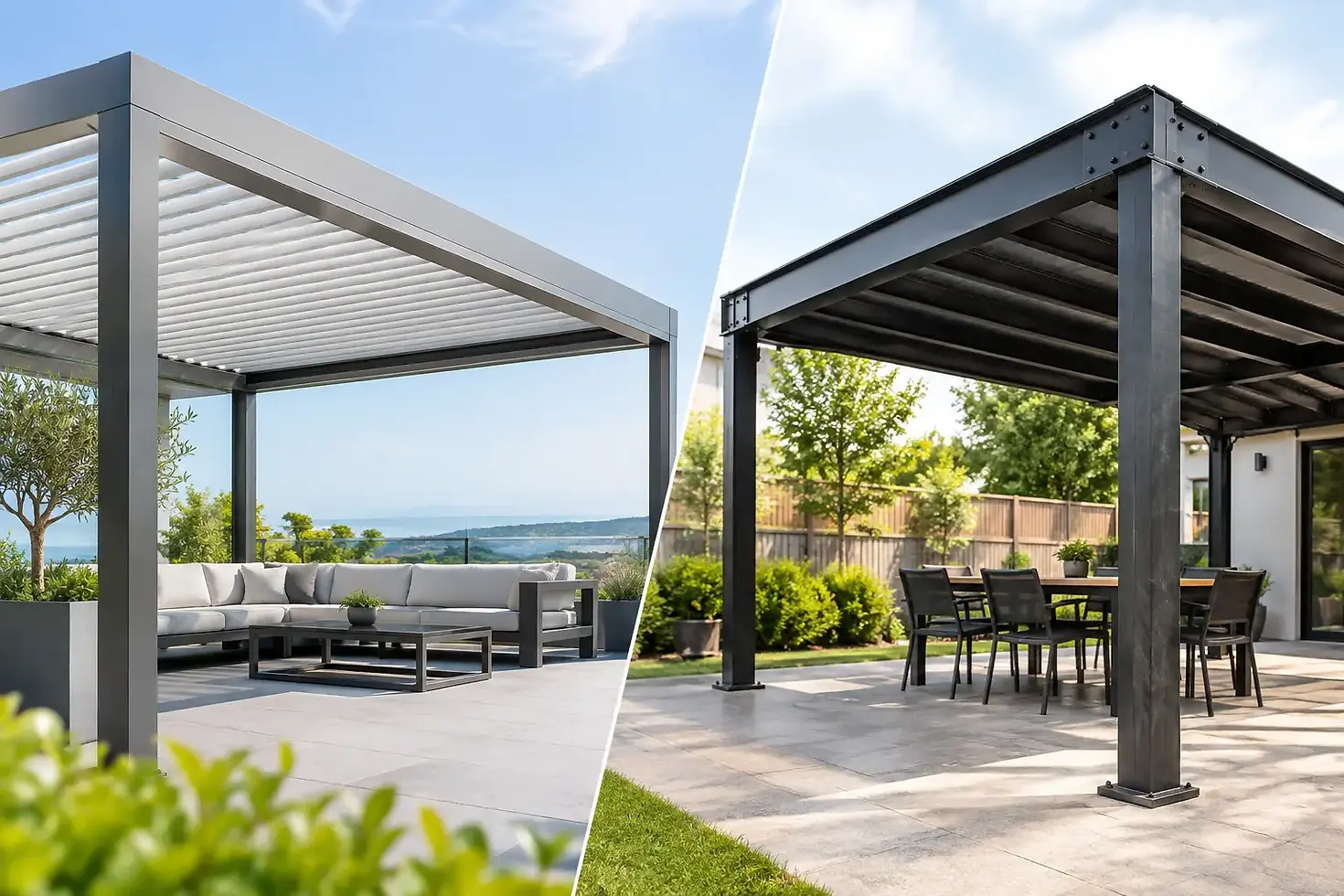
Aluminium Pergolas Versus Steel Structures

A shaded terrace can become the most used part of a Dubai villa - or an expensive space that is too hot, too dark or too demanding to maintain. When comparing aluminium pergolas versus steel structures, the right choice is not simply about strength. It is about how the framework responds to heat, humidity, wind, rain, design expectations and the way your family actually uses the garden.
For most residential outdoor-living projects in the UAE, aluminium provides the more refined and practical starting point. Steel still has a place, particularly where exceptional spans or highly bespoke architectural forms are required. The best decision comes from matching the material to the site, the roof system and the finished space you want to create.
Aluminium pergolas versus steel structures in Dubai
Both aluminium and steel can create a substantial, attractive pergola. Their differences become clearer after installation, when the structure is exposed to intense sunlight, airborne dust, occasional heavy rainfall and regular cleaning.
Aluminium is naturally corrosion resistant. A quality powder-coated aluminium pergola does not rely on paint alone to protect it from rust, making it well suited to humid coastal areas as well as inland villas. It is also comparatively lightweight, which gives designers greater flexibility when positioning columns, integrating gutters and creating clean-lined roof details.
Steel is heavier and exceptionally strong. It can be an excellent engineering choice for very wide spans, unusual load requirements or projects where a slender structural member is essential. However, steel needs careful corrosion protection, particularly at cuts, welds, joints and fixings. If that protective finish is damaged or poorly maintained, rust can become both a visual and structural concern over time.
For a family patio, poolside dining area or garden lounge, the practical benefits of aluminium often outweigh steel's greater raw strength. A properly engineered aluminium system is more than capable of handling the demands of a residential pergola, including integrated motorised roofs, blinds and glazing where specified correctly.
Heat performance is about the whole system
Homeowners often ask which metal stays cooler. Both aluminium and steel conduct heat, so neither should be treated as insulation by itself. The more useful question is how the completed pergola controls solar gain.
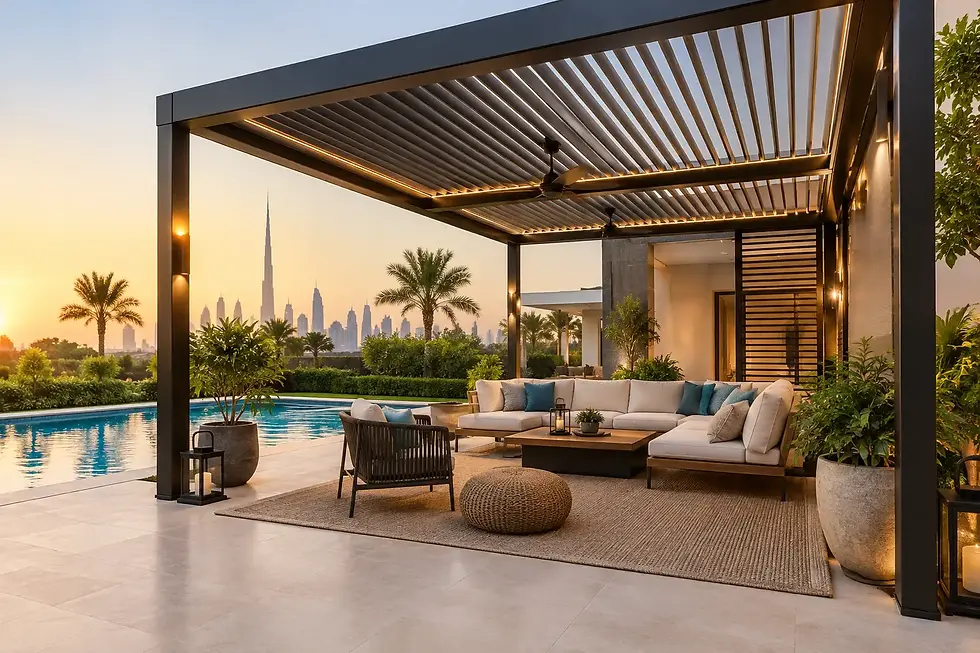
A well-designed aluminium pergola can incorporate insulated louvres, retractable roof fabric, thermal breaks where appropriate, drainage channels and perimeter zip blinds. These elements do far more for comfort than the frame material alone. Adjustable louvres allow sunlight and ventilation to be managed throughout the day, while a retractable roof gives you the choice of open sky in pleasant weather and dependable shade when the afternoon sun is strongest.
Steel structures can support similar additions, but their fabrication and detailing must be precise. Uninsulated steel sections in direct sun can become extremely hot, and poorly planned roof panels may trap heat beneath the canopy. That is why material selection should never be separated from roof design, orientation and the intended level of enclosure.
For west-facing terraces, consider more than overhead cover. Motorised zip blinds can reduce low-angle glare and help make outdoor dining comfortable later in the day. Sliding glass doors can provide protection during wind or rain without losing the visual connection to the garden. Add a misting or fogging system selectively, and the pergola becomes a more usable setting through warmer months.
Design freedom and the look of the finished space
Aluminium suits the crisp, contemporary architecture seen across many Dubai communities. It can be powder coated in a wide range of colours and finished with concealed drainage, integrated lighting channels and discreet motor housings. The result can feel like a considered extension of the villa rather than an added shade frame.
Its lighter weight also supports a more efficient installation process, subject to access and foundations. This matters in occupied homes, where families want clear project coordination and minimal disruption around driveways, landscaped areas and existing patios.
Steel can create a more industrial or architectural character. It is often selected for dramatic cantilevers, large open entertaining zones or designs that deliberately expose the structure as a feature. There is nothing inherently less premium about steel. But if your aim is a clean pergola with motorised louvres, blinds, lighting and glazing, aluminium is usually easier to detail in a cohesive way.
The visual success of either material depends on proportion. Columns need to suit the scale of the villa, the roof should align with doors and windows where possible, and drainage should be planned before finishes are chosen. A pergola that looks elegant in a brochure can feel heavy in a modest garden if its spans, heights and roof depth are not tailored to the site.
Maintenance, corrosion and long-term appearance
Aluminium is the lower-maintenance option for most UAE homeowners. Regular washing to remove dust, salt residue and garden debris is usually sufficient, alongside periodic checks of moving roof components, drainage outlets and seals. Powder coating provides durable colour retention when specified for the local climate and maintained appropriately.
Steel requires more attention because corrosion protection is central to its lifespan. Galvanising, high-performance paint systems and specialist coatings can perform very well, but they must be applied correctly and inspected over time. Scratches, chipped paint and water-trapping joints should be addressed promptly. Near the coast, this is particularly relevant.
This is not a reason to reject steel automatically. It is a reason to account for its care requirements honestly before committing. A lower initial quotation can become less attractive if regular coating repairs, repainting or corrosion treatment are likely later.
Aluminium also offers an advantage where several outdoor elements must work together. Pergola frames can be coordinated with louvre roofs, zip blinds, sliding glass panels, outdoor kitchens and furniture layouts from the outset. Rather than asking separate contractors to solve connections on site, a single coordinated design reduces visual compromises and avoids unnecessary junctions between systems.
Strength, wind resistance and engineering detail
Steel has a higher strength-to-section advantage, which is valuable in demanding structural applications. For a pergola, though, strength is only one part of performance. Wind loads, roof weight, drainage, anchoring, foundation conditions and connections to the villa all matter.
An aluminium pergola should not be selected from a generic size chart and placed on an existing patio without assessment. The column positions, beam profiles and anchoring method need to be suitable for the location and roof type. A motorised louvre roof, for example, has different loads and drainage requirements from a simple fixed shade canopy.
Wind resistance also depends on how accessories are used. Zip blinds and sliding glass must be specified for their opening sizes and operating limits, particularly in exposed plots. The reassuring answer is not that every pergola can remain closed in every weather condition. It is that the system is designed, installed and used within clear performance parameters.
A professional site survey identifies these details early. It also reveals practical issues such as underground services, uneven paving, rainwater routes, neighbouring sightlines and access for installation. These points are less glamorous than roof colours, but they shape the quality of the finished project.
Cost: compare the completed outdoor room
It is tempting to compare pergolas by square-metre price alone. That rarely gives a useful picture. The final investment depends on dimensions, structural spans, roof type, foundations, electrical works, lighting, drainage, finishes and accessories such as blinds or glazing.
A simple steel frame may appear less expensive than a fully engineered aluminium louvre pergola, but they are not equivalent products. One is a basic structure; the other can be a weather-responsive outdoor room designed for family meals, barbecues, celebrations and quiet evenings.
For bespoke residential projects, transparent scope matters more than an unusually low headline figure. Ask whether the quotation includes engineering, delivery, installation, drainage, electrical allowances, controls, finishing details and aftercare guidance. Clarify what is excluded as well. This makes it easier to compare options fairly and prevents surprises once work begins.
At Euro Pergola Studio, projects are assessed around the intended lifestyle as well as the physical footprint. A family that wants shaded daytime play, outdoor cooking and evening entertaining may benefit from a different roof, blind and lighting arrangement than a homeowner seeking a calm poolside lounge.
Which material is right for your villa?
Choose aluminium when you want a low-maintenance, corrosion-resistant pergola with a refined contemporary finish and integrated outdoor-living features. It is particularly well suited to motorised louvres, retractable roofs, blinds, glazing and lighting, and it gives most residential properties the balance of performance and visual polish they need.
Consider steel where the design calls for exceptional spans, unusual cantilevers or a deliberately exposed architectural structure. Be prepared to invest in proper protective coatings, detailed fabrication and a considered maintenance plan.
The most rewarding pergola is not defined by the metal alone. It is the one that sits naturally beside your home, manages Dubai's climate intelligently and gives your family a comfortable reason to gather outside more often. Begin with a site survey and a clear picture of how you want to live outdoors, then let the engineering and material choice follow that ambition.

Comments