
Retractable Roofs Versus Fixed Canopies

A villa terrace can feel like the best room in the house for six months of the year, then become too bright, too hot or too exposed to use properly. The decision between retractable roofs versus fixed canopies determines far more than the appearance of your garden. It affects how comfortably your family can dine outside, how much daylight reaches adjoining rooms, and how confidently you can entertain when the weather changes.
For Dubai homeowners, the right answer is rarely about choosing the most elaborate option. It is about matching the structure to the way you live, the orientation of the property and the level of weather control you expect from your outdoor space.
The essential difference
A fixed canopy provides permanent overhead cover. It may be formed from insulated aluminium panels, solid roofing, fabric or a purpose-designed pergola roof. Once installed, its coverage does not change. This makes it a strong choice where reliable shade and consistent rain protection are the priority.
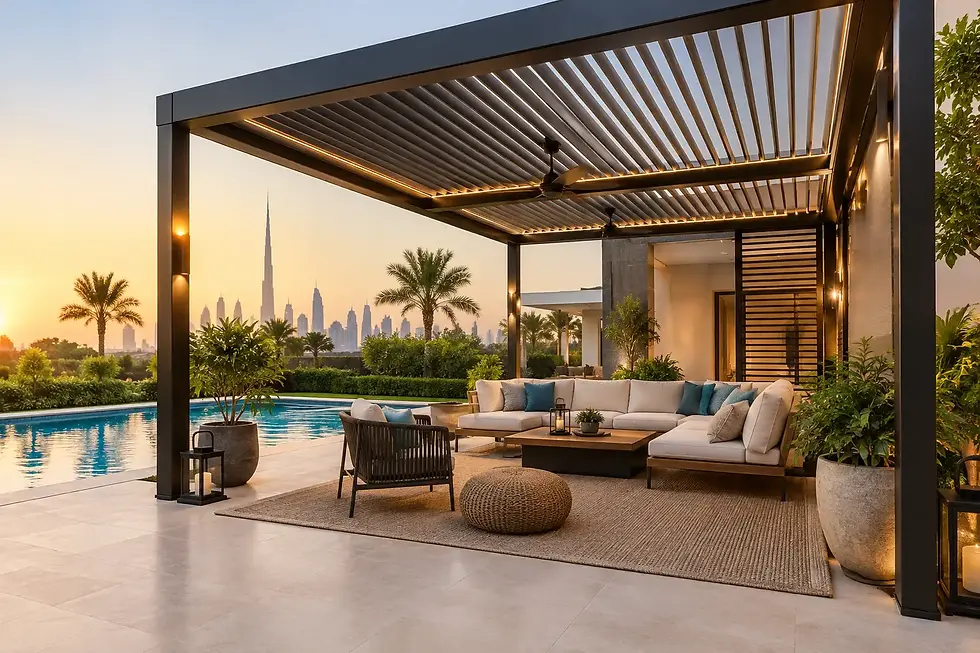
A motorised retractable roof uses adjustable aluminium louvres or retracting roof panels to give the homeowner control. At the touch of a remote, the roof can open for fresh air and sunlight, partially close for filtered shade, or close fully when protection is needed. Some systems can also include integrated drainage, lighting, zip blinds and sliding glass doors to create a more enclosed outdoor room.
Both can look refined when designed around the villa architecture. The real difference is flexibility. A fixed canopy gives certainty; a retractable roof gives choice.
Retractable roofs versus fixed canopies for Dubai weather
Dubai’s climate asks more of an outdoor structure than simple shade. Intense ultraviolet exposure, high summer temperatures, dust, occasional heavy rainfall and wind all need to be considered before finalising a design.
Shade and heat management
A fixed insulated canopy is highly effective when a terrace receives harsh sun for much of the day. With the right roof build-up and finish, it provides dependable shade and can reduce the heat load beneath the structure. It is particularly practical above an outdoor kitchen, barbecue counter or dining area that will be used regularly at the same time of day.
A retractable louvre roof can also provide strong protection when fully closed, while allowing warm air to rise and escape when the louvres are open. This ventilation can make a noticeable difference during the milder months, especially in spaces that would otherwise feel enclosed. The ability to angle louvres also lets you soften direct sun without losing all natural light.
Neither roof makes an outdoor space cool on its own in peak summer. For genuine daytime comfort in July and August, homeowners should consider the complete setting: roof coverage, orientation, side shading, misting or fogging, fans and the use of insulated materials. A beautifully designed pergola works best when these elements are considered together rather than added as an afterthought.
Rain, drainage and wind
A permanent canopy provides predictable protection whenever rain arrives. However, a well-engineered motorised roof can offer the same practical benefit when closed, provided its drainage channels, gutters and downpipes are correctly specified and installed. Water management matters as much as the roof surface itself. Poorly planned drainage can create splashing, staining and unwanted runoff near doors or landscaped areas.
Wind performance should never be assumed from photographs alone. The frame size, post locations, fixing method, roof span and surrounding building conditions all affect how a structure performs. A system suitable for a sheltered courtyard may require a different engineering approach on an open rooftop or exposed garden elevation.
This is where a site survey earns its value. Measurements, prevailing exposure, wall condition and the intended use of the area should all inform the specification. The most attractive design is only worthwhile if it is properly anchored and built for the conditions it will face.
When a fixed canopy is the better investment
A fixed canopy often suits homeowners who want a clear, permanent solution with fewer moving components. It can be especially effective where the outdoor area has one primary purpose: a covered dining terrace, a children’s play area, a poolside sitting zone or a barbecue space.
It is also a sensible option when budget needs to be directed towards other features. If your priority is a large covered footprint, then a fixed aluminium pergola roof can provide excellent value. It creates a defined outdoor room, supports integrated lighting and can be paired with motorised zip blinds for low-angle sun, privacy and dust control.
Design is still important. A fixed roof should not make the rear elevation feel heavy or reduce useful daylight inside the home. Roof depth, post placement, colour, ceiling detailing and the transition to existing walls all deserve attention. A structure that looks like it was always part of the villa adds much more value than one that simply covers a patio.
Fixed canopies are often easier to plan around for outdoor kitchens and furniture because the shaded zone is constant. If you know exactly where the dining table, sofa set and cooking area will sit, a permanent roof can create a calm, dependable setting for family gatherings.
When a retractable roof earns its higher cost
A motorised retractable roof is best for homeowners who want their terrace to respond to different seasons and occasions. Open it on a pleasant evening, tilt it for dappled shade at lunchtime, then close it during rain or when stronger overhead protection is required. That versatility can make one area feel open and garden-facing one day, then private and protected the next.
It is particularly valuable where preserving daylight is important. A terrace immediately outside a family room, for example, may benefit from an opening roof that gives the interior more light when overhead shade is not needed. The same is true of compact gardens, where a fully solid roof might make the whole outdoor area feel darker.
The additional engineering, motorisation and drainage details mean a retractable system generally costs more than a basic fixed canopy. It also needs professional installation and sensible maintenance. Moving louvres, motors and sensors should be selected for local conditions, commissioned correctly and kept clear of dust and debris.
For many villa owners, the investment is justified because it increases the number of hours the space can be enjoyed. A roof that changes with the weather supports breakfast, afternoon play, evening dining and weekend entertaining without forcing the family to choose between full exposure and permanent enclosure.
Do not choose the roof in isolation
The strongest outdoor living spaces are coordinated as one project. The roof is the starting point, but the side treatments, lighting, flooring, furniture and cooling measures decide whether the area feels finished.
Motorised zip blinds can block low sun and improve privacy without closing the space with masonry. Sliding glass doors can turn a pergola into a more protected garden room while retaining views. Warm integrated lighting makes an outdoor dining area usable after sunset, while a carefully placed misting system can improve comfort during hotter periods.
It is also worth considering room-darkening performance before work begins. If the pergola sits outside a glass-walled lounge or bedroom, ask how much light the proposed roof and blinds will block at different times of day. The right solution should improve outdoor comfort without creating an unexpectedly dark interior.
A single coordinated design also avoids the familiar problem of separate contractors leaving mismatched details behind: lighting added after the roof, blinds that interfere with posts, drainage routed awkwardly around a kitchen, or furniture that does not fit the final layout.
Questions to ask before approving a design
Before selecting either option, ask for clarity on the roof material, aluminium profile thickness, drainage route, fixing details and expected performance in wind and rain. Request a layout that shows post positions, furniture clearances and the direction of sun at the times you use the space most.
You should also understand what is included in the quotation. Electrical provisions, lighting, controls, foundations, rainwater drainage, blinds and finishing work can significantly affect the final cost. Transparent pricing is more useful than a low initial figure that leaves essential items unclear.
For bespoke aluminium pergolas, prices commonly start from around AED 300 per square metre, although the final investment depends on span, specification, motorisation, accessories and site conditions. A proper survey is the only reliable way to price a tailored solution.
Euro Pergola Studio approaches these projects as complete outdoor-living installations, combining design guidance with supply and professional fitting so homeowners can make decisions with one experienced team rather than managing multiple trades.
Your terrace should not be designed only for the hottest afternoon or the occasional rainy day. It should be designed around the moments you want to have there: long family lunches, children playing nearby, quiet evenings and gatherings that continue comfortably after the sun goes down. Start with those moments, then choose the roof that gives them the best place to happen.

Comments