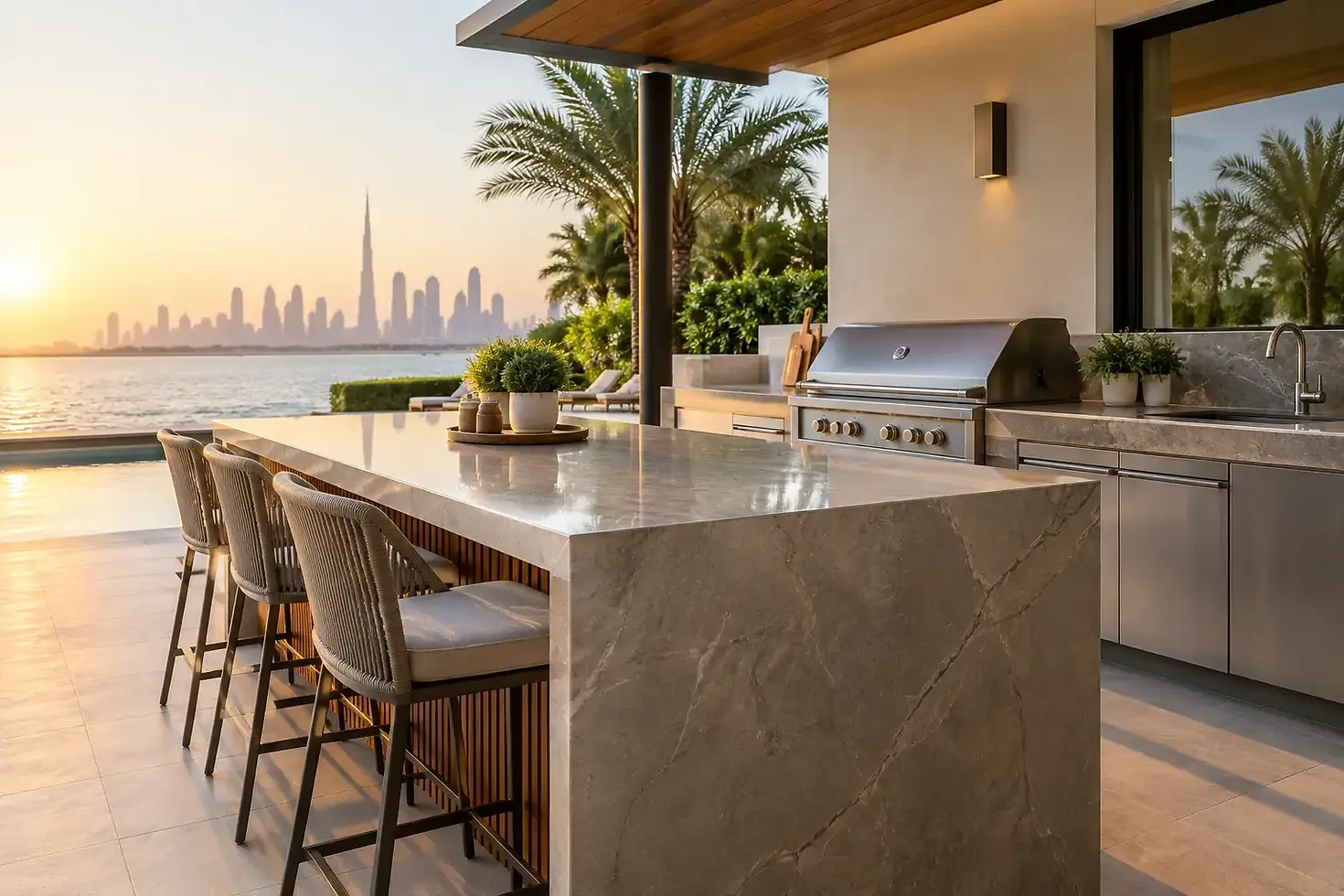
Outdoor Kitchen Worktops for Dubai Villas

A beautiful outdoor kitchen can lose its appeal quickly when the worktop stains, fades or becomes too hot to use. In Dubai, outdoor kitchen worktops must do far more than look refined beside a pergola. They need to tolerate intense UV exposure, high surface temperatures, airborne dust, occasional rainfall and the demands of family lunches, barbecue evenings and larger gatherings.
The right choice is rarely about selecting the most expensive slab in a showroom. It is about matching the material, finish, layout and installation details to the way your family uses the space. A worktop for a shaded breakfast bar has different requirements from one beside a grill that receives direct afternoon sun.
Why Outdoor Kitchen Worktops Need Careful Specification
A kitchen worktop sits at the heart of the outdoor entertaining area. It frames the barbecue or pizza oven, gives guests a place to gather and provides the practical surface for preparing, serving and clearing food. When it is well proportioned and carefully detailed, it helps an outdoor kitchen feel like a considered extension of the home rather than a collection of appliances.
Dubai's climate changes the specification. Heat can make dark surfaces uncomfortable to touch, while ultraviolet exposure can affect resins, sealants and lower-grade finishes. Dust will settle regularly, and grease from cooking needs to be cleaned without leaving marks. Water also needs a route away from cabinetry and adjoining finishes during washing and rain.
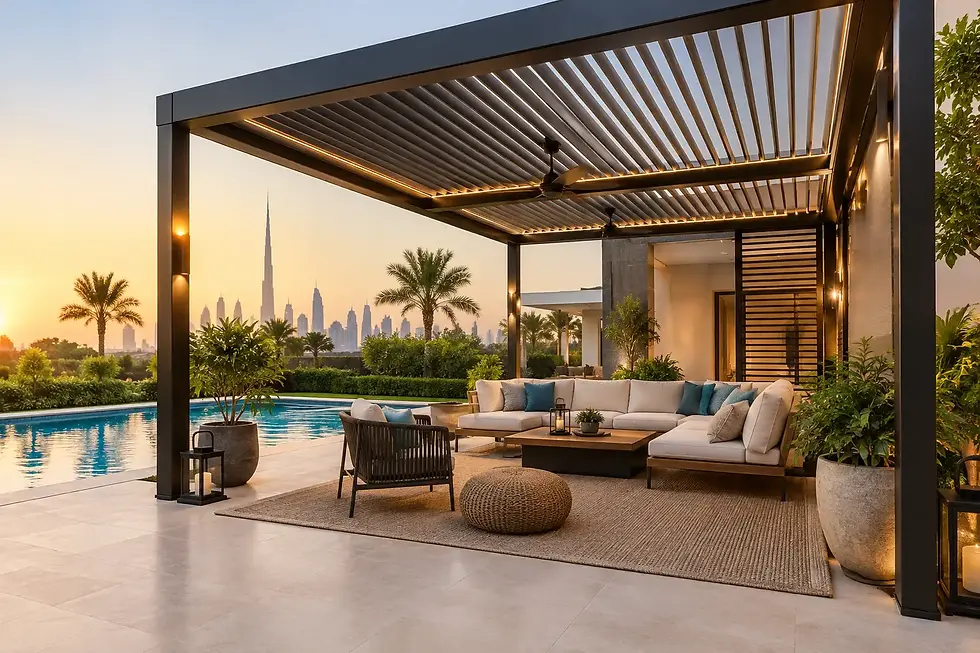
This is why material selection should be discussed alongside shade, ventilation and kitchen positioning. A louvred or retractable pergola can make the space more comfortable, but it does not remove the need for an exterior-grade worktop system.
The Best Materials for Outdoor Kitchen Worktops
There is no single perfect material for every villa. The best option depends on the amount of sun, the cooking equipment, the desired appearance and how much maintenance you are willing to undertake.
Porcelain and sintered stone
Porcelain and sintered stone are often strong choices for premium outdoor kitchens. These surfaces are designed to be highly resistant to heat, staining, moisture and UV exposure. They are available in convincing stone, concrete and marble-look finishes, allowing homeowners to create a polished kitchen without relying on a delicate natural slab.
A pale or mid-tone porcelain is particularly practical in open areas because it stays visually cooler and tends to show less dust than high-gloss black. Choose a textured or matt finish where possible. It is more forgiving of fingerprints and can offer better grip around a sink or drinks station.
The quality of fabrication matters as much as the slab itself. Cut-outs for hobs, sinks and appliances need correct support, while exposed edges should be neatly mitred or finished to match the surrounding design. Large-format slabs can create a calm, uninterrupted look, but they require experienced handling during installation.
Natural granite
Granite remains a dependable option for exterior use, especially for homeowners who value the individuality of natural stone. It handles heat well and offers a depth of colour and movement that manufactured surfaces cannot replicate exactly. Darker granites can look striking against aluminium pergola structures, timber-effect cabinetry and stainless-steel appliances.
Its trade-off is maintenance. Granite should be properly sealed, and the sealant may need renewing over time depending on use and exposure. Some lighter stones can be more vulnerable to staining from oils, sauces and drinks. A honed finish generally creates a more contemporary appearance, although polished granite can suit a more formal villa design.
Before committing, view the actual slab rather than a small sample. Natural veining and colour variation are part of its character, but the chosen piece should sit comfortably with the façade, patio tiles and outdoor furniture.
Stainless steel
Stainless steel is the practical professional option, particularly around intensive grilling, wet preparation areas and compact outdoor bars. It is hygienic, heat-resistant and easy to clean after cooking. In the right setting, it creates a confident architectural look that works especially well with dark aluminium, glass and contemporary lighting.
However, stainless steel is not maintenance-free. Water marks, fingerprints and fine scratches will be visible, particularly on highly polished finishes. It can also become hot in direct sun. A brushed finish is usually the more forgiving choice for a family kitchen, and well-planned shade makes a clear difference to day-to-day comfort.
Concrete and specialist exterior surfaces
Concrete can deliver a substantial, bespoke appearance, especially in modern landscaped gardens. It can be cast to suit unusual shapes and integrated with seating, planters or a raised serving ledge. Yet it is not a casual choice. It needs professional sealing and careful detailing to reduce the risk of cracking, staining and uneven weathering.
Specialist exterior composite surfaces can also be considered, but their suitability should be confirmed product by product. Do not assume that an indoor quartz or resin-based worktop will perform well outside. Many engineered quartz materials are not recommended for areas with prolonged direct sunlight, as heat and UV can affect colour and resin binders.
Design the Worktop Around How You Entertain
The most successful outdoor kitchens separate preparation, cooking and serving without making the area feel formal. A clear worktop beside the grill gives the cook room to work safely. A second section near the dining area allows guests to collect drinks or plates without crowding the cooking zone.
For regular family use, allow generous landing space on both sides of a sink, barbecue or pizza oven. A narrow strip may look sufficient on a plan, but it becomes frustrating when trays, utensils and serving dishes are in use. An island or peninsula can create a natural social point, provided there is enough circulation around it for guests and children.
Consider the height as carefully as the material. Standard kitchen counter height suits food preparation, while a raised bar section can make casual entertaining more comfortable. A two-level arrangement also helps screen the practical cooking area from the seating side.
Colour deserves a practical conversation. Light surfaces can reduce heat absorption but may require more frequent wiping after a busy barbecue. Very dark worktops look elegant and dramatic, though they can show dust and become uncomfortably warm in exposed locations. Samples should be viewed outdoors at the intended time of day, not only beneath showroom lighting.
Installation Details That Protect the Kitchen
A premium worktop needs a stable base. Outdoor cabinetry, frames and support structures must be level, strong enough for the slab weight and suitable for exterior conditions. Aluminium structures are valued for their resistance to corrosion and their clean, precise finish, while masonry bases can provide a more built-in architectural feel.
Water management is essential. The worktop should be detailed so water does not track into cabinets, pool around appliance openings or sit against walls. Small falls, carefully positioned joints and appropriate sealants all contribute to long-term performance. Where a sink is included, pipework and drainage need to be planned before finishes are installed.
Thermal movement also matters. Outdoor surfaces expand and contract more than indoor materials. Correct joints and flexible exterior-grade sealants help accommodate this movement and reduce the risk of cracking or separation. Appliances require ventilation clearances too, especially built-in grills, under-counter fridges and gas equipment.
Shade should be treated as part of the kitchen specification, not an afterthought. A well-designed pergola, motorised roof or zip blind system can reduce glare, make food preparation more comfortable and protect surrounding cabinetry and furniture. It also extends the hours when the kitchen can be enjoyed, from bright weekend mornings to warm evenings with friends.
Keeping Your Worktop Looking Its Best
Regular care is straightforward when the material has been chosen well. Wipe food spills promptly, particularly oils, acidic drinks and sauces. Use a pH-neutral cleaner suited to the worktop rather than harsh chemicals, bleach or abrasive pads that can dull finishes and affect sealers.
Natural stone benefits from periodic inspection for sealant performance, while stainless steel should be cleaned in the direction of its grain to keep the finish even. Avoid placing extremely hot pans directly onto any surface unless the manufacturer confirms it is suitable. Heat resistance does not always mean immunity from thermal shock.
During a site survey, it is worth discussing exactly where the kitchen will sit in relation to the sun, prevailing wind, pool area and main indoor living space. This is often where the best decisions are made: not from a material swatch alone, but from understanding how the whole outdoor room will work.
A well-planned worktop gives your outdoor kitchen a dependable place for everyday family meals and the larger occasions that bring everyone together. Euro Pergola Studio can coordinate the surface, cabinetry, shade and finishing details as one considered outdoor-living project, so the result feels as good to use as it does to look at.

Comments