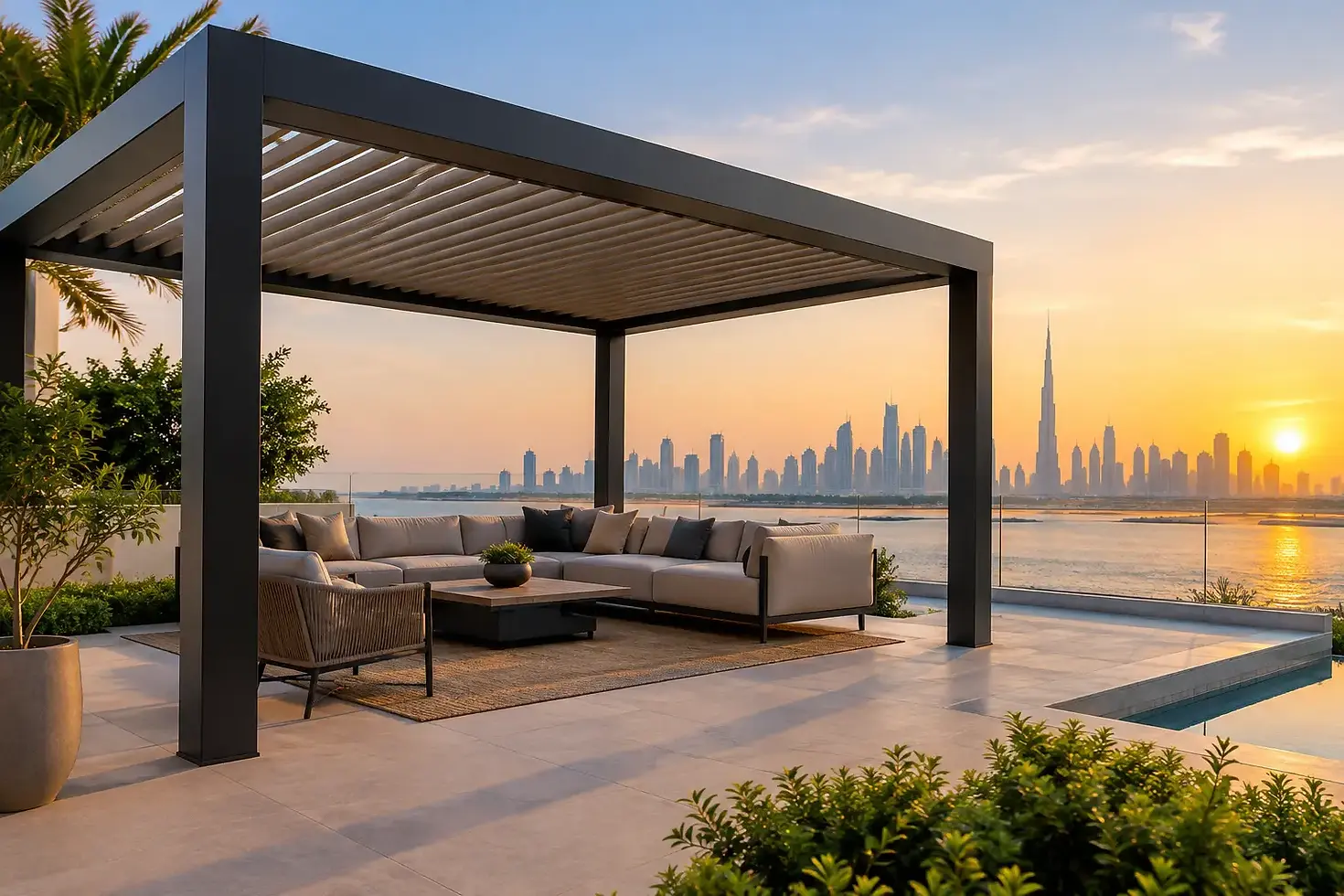
How Pergola Suppliers Shape Dubai Outdoor Living

A pergola should make a Dubai villa’s outdoor area more usable, not create a new list of maintenance worries. The right pergola suppliers do far more than deliver a frame and a roof. They help turn an exposed patio, poolside or garden into a composed family space for lunches, evening gatherings and relaxed weekends outside.
For homeowners, the decision is rarely just about shade. It is about whether the structure suits the architecture of the house, copes with fierce sun and occasional heavy rain, and can be finished with the blinds, glazing, lighting, cooling and furniture that make the area genuinely comfortable. That is why supplier selection deserves the same care as any significant home improvement.
What separates capable pergola suppliers from basic installers?
The difference usually becomes clear before work starts. A capable supplier asks how you intend to use the space: whether it is primarily for outdoor dining, children’s play, poolside relaxation or entertaining. They will also assess orientation, available fixing points, neighbouring sightlines, drainage routes and the effect of afternoon sun.
A basic installer may offer a standard size and a quick price. A specialist should be able to explain why a particular roof design, post position and accessory combination will work on your property. This matters in the UAE, where a beautiful pergola can still be disappointing if glare enters from the west, rainwater is poorly managed, or the roof does not provide enough shade at the times you use the terrace most.
Look for a supplier that takes responsibility for the complete project rather than treating the pergola as an isolated product. Coordination is especially valuable where motorised zip blinds, sliding glass doors, an outdoor kitchen or a misting system are part of the brief. When these elements are considered together, the finished space feels purposeful rather than added in stages.
Start with the structure, not the brochure
Photographs can show style, but they cannot show engineering. Before choosing a design, ask what material is being specified, how the structure will be fixed, and how it has been considered for local wind, heat and rainfall.
Aluminium is a strong choice for bespoke residential pergolas because it is durable, low-maintenance and well suited to clean contemporary detailing. However, not all aluminium systems are alike. Profile dimensions, wall thickness, joint design, drainage channels, powder-coat finish and the quality of the operating components all affect long-term performance and appearance.
A good supplier will be direct about what the system can and cannot do. For example, a louvred or retractable roof provides flexible shade and ventilation, but its performance depends on correct installation and drainage planning. A fully enclosed outdoor room can offer more protection from dust and wind, yet it requires careful thought around ventilation, solar gain and how the space will be used through warmer months.
Do not assume that a heavier-looking frame is automatically better. The right specification depends on span, roof type, fixing conditions and the design of the home. The key is an engineered solution that looks light and elegant while being properly supported.
Ask about heat, glare and room-darkening
Heat management is not solved by the frame alone. The roof fabric or louvres, orientation, side protection and airflow all influence comfort. A terrace with direct low-angle sunlight may need motorised zip blinds as much as it needs overhead cover.
Quality blinds can reduce glare, improve privacy and make a pergola feel significantly cooler at the times when sunlight is most intrusive. Their fabric openness, colour and guide system should be selected for the view, shading requirement and desired level of privacy. If you want the area to work for daytime television, dining or children’s play, ask for clear guidance on room-darkening performance rather than relying on a generic product description.
Choose a design that belongs to your home
A pergola should feel like a considered extension of the villa, not an object placed beside it. This is where design advice has real value. The roof line, column proportions, finish colour and placement of screens should work with the home’s façade, boundary walls, paving and garden.
For a modern villa, slim aluminium profiles and a restrained palette may provide the right result. A more traditional property may suit warmer finishes, considered lighting and furniture that softens the architectural lines. Neither approach is inherently better. What matters is a coherent outdoor setting that still feels appropriate years after installation.
It also helps to plan the space around real habits. A dining table needs circulation room even when chairs are pulled out. An outdoor kitchen needs practical access to utilities and a sensible relationship with the seating area. Families often benefit from a flexible layout that allows adults to entertain while keeping a comfortable, visible area for children.
Understand the price before you compare it
Comparing quotes only by square metre can be misleading. Pergola pricing reflects more than the roof area: dimensions, site access, foundations or fixings, roof mechanism, integrated drainage, electrical work, blinds, glazing and bespoke finishing all influence the total.
A starting figure can be useful for early budgeting. At Euro Pergola Studio, projects begin from AED 300 per square metre, with the final proposal shaped by the selected system and site requirements. The important point is transparency. A detailed quotation should show what is included, what needs to be allowed for, and which upgrades are optional.
Be cautious with an unusually low initial price if the scope is vague. It may exclude installation details, electrical preparation, water management or accessories required to make the pergola comfortable. Conversely, the highest quotation is not automatically the best value if it specifies features you do not need. Ask each supplier to price a comparable brief and explain the assumptions behind it.
The site survey is where confidence is built
A proper site survey is not a formality. It is the stage where ideas become practical decisions. The supplier should measure accurately, inspect the intended installation surface, identify obstructions and discuss drainage, power supply and access for the installation team.
This conversation should also cover the less obvious details: where water will run during rain, whether existing tiles can remain, how blinds will stack when open, and whether neighbours can overlook the area. If specialist requests are important - such as a particular finish, integrated lighting, outdoor speakers or a fogging system - raise them early, not after manufacturing has begun.
Clear communication matters just as much as technical knowledge. You should know who is coordinating the project, when design decisions need approval, how long installation is expected to take, and what happens if site conditions differ from the original plan. A well-managed project gives homeowners confidence throughout the process, not only on completion day.
Consider the finished outdoor room
The most successful pergolas are not judged by the roof alone. They are judged by the evenings spent beneath them: a family dinner protected from glare, a barbecue area that remains comfortable, or a poolside lounge that feels private without closing off the garden.
That is why a single, coordinated supplier can be preferable to arranging multiple trades independently. When pergola, blinds, glazing, kitchen, cooling and furniture are designed as one setting, dimensions and finishes can be resolved before installation. It reduces the risk of duplicated work, mismatched colours or accessories that do not fit the structure properly.
There is a trade-off. A phased approach may spread costs over time, while a complete scheme requires a larger initial commitment. Yet planning the whole space from the outset still makes sense, even if some elements are installed later. It protects the design intent and allows the structure to accommodate future additions.
A better question to ask before signing
Rather than asking only, “How much is the pergola?”, ask, “How will this space perform for my family in July, in the rain, and when we are entertaining at night?” The answer should cover shade, ventilation, privacy, drainage, lighting and useability, not simply measurements and material names.
Choose the supplier that listens carefully, explains the technical choices plainly and can deliver a polished result without leaving you to coordinate the finishing details. A well-planned pergola becomes part of daily family life - a calm, comfortable place where the home naturally extends outdoors.

Comments