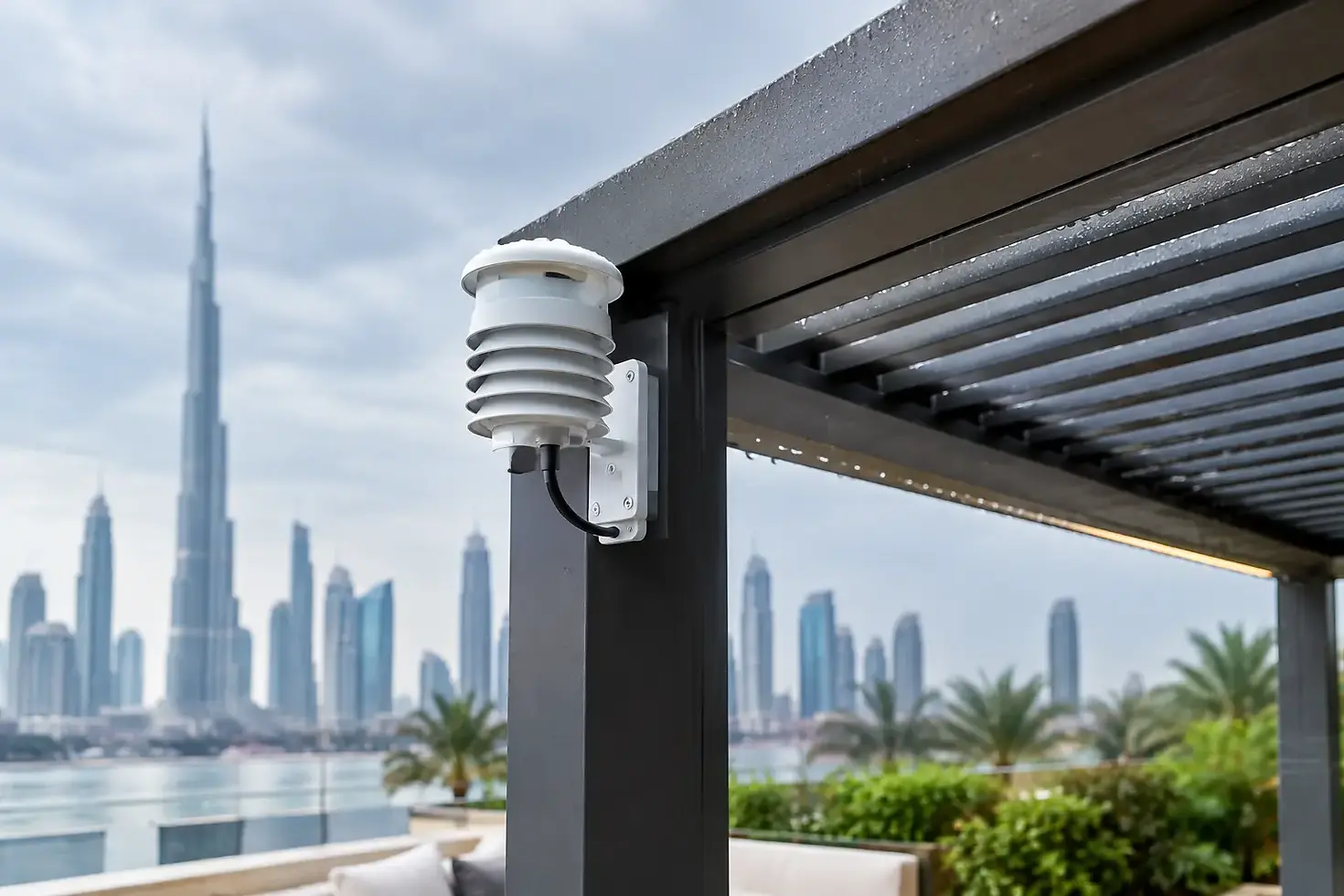
Automated Rain Sensors for Dubai Pergolas

A Dubai afternoon can move quickly from bright sun to a short, forceful shower. Automated rain sensors give a motorised pergola the ability to respond before cushions, dining settings and carefully chosen outdoor finishes are exposed. For villa owners who use their garden for family meals, barbecues and entertaining, this small piece of technology can make a substantial difference to how confidently the space is enjoyed.
A rain sensor is not simply an accessory added at the end of a project. When it is properly integrated with a louvred or retractable roof, drainage system, blinds and control settings, it becomes part of a considered outdoor-living solution. The result is an elegant space that remains practical when the weather changes unexpectedly.
How automated rain sensors work
Most automated rain sensors use a detection plate that reacts when rainwater lands on its surface. Once moisture reaches a pre-set level, the sensor sends a signal to the pergola control system. The motorised roof then closes, usually moving to its fully weather-protective position, while integrated gutters direct water away from the covered area.
The response can be almost immediate, but the right settings matter. A sensitive sensor may react to a few drops, which is useful if furniture and finishes need protecting at all times. In other homes, a short delay can prevent unnecessary roof movement during light mist or after a washing-down. The suitable setting depends on the property, the roof design and how the terrace is used.
For a bioclimatic aluminium pergola, closure generally means rotating the louvres into a sealed position. For a motorised retractable roof, it means extending the fabric or roof panels to create cover. Neither system should be judged by the sensor alone. Reliable performance depends on the entire assembly: correctly engineered motors, quality seals, adequate gutter capacity and installation with the right falls for drainage.
Why they are valuable in Dubai homes
Dubai is known for prolonged sunshine, but occasional rain is often intense enough to overwhelm an unprepared outdoor area. A roof left open while the family is out, or while everyone is inside, can allow water onto upholstered furniture, outdoor kitchens, electrical fittings and flooring. Automated closure reduces that risk without requiring somebody to monitor the forecast or reach for a remote control.
There is also a comfort benefit. When the roof closes promptly, a covered terrace can remain usable during a passing shower rather than becoming an area that needs drying and resetting afterwards. For homes designed around gatherings, that continuity matters. A relaxed lunch should not turn into a rushed effort to move chairs, covers and serving dishes indoors.
The benefit is strongest when rain sensors are considered alongside zip blinds or sliding glass doors. A roof protects the space from above, while carefully specified side enclosures can reduce wind-driven rain from entering the terrace. However, full enclosure is not always the right answer. Some homeowners want an open garden connection and only need automatic roof protection; others plan to use the space in more varied conditions and prefer a more sheltered garden room effect.
Automated rain sensors need the right roof system
A sensor cannot compensate for a poorly detailed pergola. The roof must be designed to close reliably, manage water effectively and resist the conditions it will face throughout the year. This is particularly relevant in the UAE, where intense heat, fine dust, high UV exposure and occasional wind place sustained demands on moving components.
Aluminium is well suited to this work because it offers strength without the maintenance burden associated with many timber structures. Yet material choice is only the starting point. The quality of powder coating, louvre or roof-panel construction, motor specification, fixings and drainage details all influence long-term performance.
A premium installation should also make practical allowances for access. Sensors and roof channels need to be reachable for periodic cleaning, especially after dusty conditions. Leaves may be less of a concern in many Dubai gardens than in wetter climates, but airborne dust can still collect in gutters and around moving parts. Simple maintenance protects drainage performance and helps the sensor remain responsive.
Sensor positioning and false activations
The sensor should be positioned where it can receive rainfall directly, without being shielded by the roof, neighbouring building or dense planting. It also needs to avoid areas where irrigation overspray, air-conditioning condensation or a nearby misting system could activate it unnecessarily.
This is why sensor placement should be planned during the site survey, rather than treated as a last-minute add-on. A garden with automated irrigation and fogging may need more careful positioning and control programming than an open terrace with no water features. An experienced installer will also consider cable routing, discreet appearance and safe connection to the roof controls.
What happens when the roof is already in use?
Homeowners sometimes ask whether an automated closure could interrupt a dinner or close onto an obstruction. The answer depends on the pergola controls and the selected roof system. Good systems include manual control and, where appropriate, safety features that manage movement responsibly.
It is sensible to discuss real household routines during the design stage. If the pergola regularly supports hanging decorations, large umbrellas, external heaters or temporary event styling, the controls and operating guidance should reflect that. Automation brings reassurance, but the space still benefits from sensible day-to-day use.
Pairing rain sensing with sun and wind control
Rain is only one part of outdoor automation. A well-designed pergola can also be specified with sun, wind and temperature-responsive controls, depending on the roof type and the client's priorities. These features can support shade management and protect blinds in stronger winds, while rain sensing protects the terrace when showers begin.
More automation is not automatically better. Each element should solve a genuine need and remain easy for the household to understand. A family that values straightforward control may prefer a rain sensor with a simple wall switch and remote. A homeowner who travels frequently or manages several properties may place greater value on integrated smart controls and status monitoring.
The key is coordination. If a motorised roof, zip blinds, lighting, misting and sliding glass all form part of the same outdoor scheme, they should be planned as one environment. This avoids visible compromises, conflicting equipment positions and the familiar frustration of dealing with several contractors when adjustments are needed.
Questions to ask before specifying a sensor
Before selecting automated rain sensors, consider how the pergola will be used when the house is empty, what furniture will remain beneath it, and whether the roof needs to protect an outdoor kitchen or dining area. It is equally useful to ask how water will leave the roof and where it will discharge once the system closes.
Ask the installer to explain the sensor's sensitivity settings, manual override options and maintenance requirements. Clarify whether it can be integrated with the chosen roof controls and whether its position could be affected by irrigation, fogging or nearby building features. These details are modest at the quotation stage but can determine whether the automation feels dependable for years.
At Euro Pergola Studio, a site survey allows these questions to be answered against the actual villa, terrace orientation and planned use of the space. It is the most reliable way to balance refined design with the technical decisions that protect it.
A pergola should make outdoor time feel easier, not create another item to worry about when clouds appear. With the right roof, drainage and sensor arrangement, a sudden shower becomes a passing change in the weather rather than a reason to abandon a beautifully finished family space.


Comments