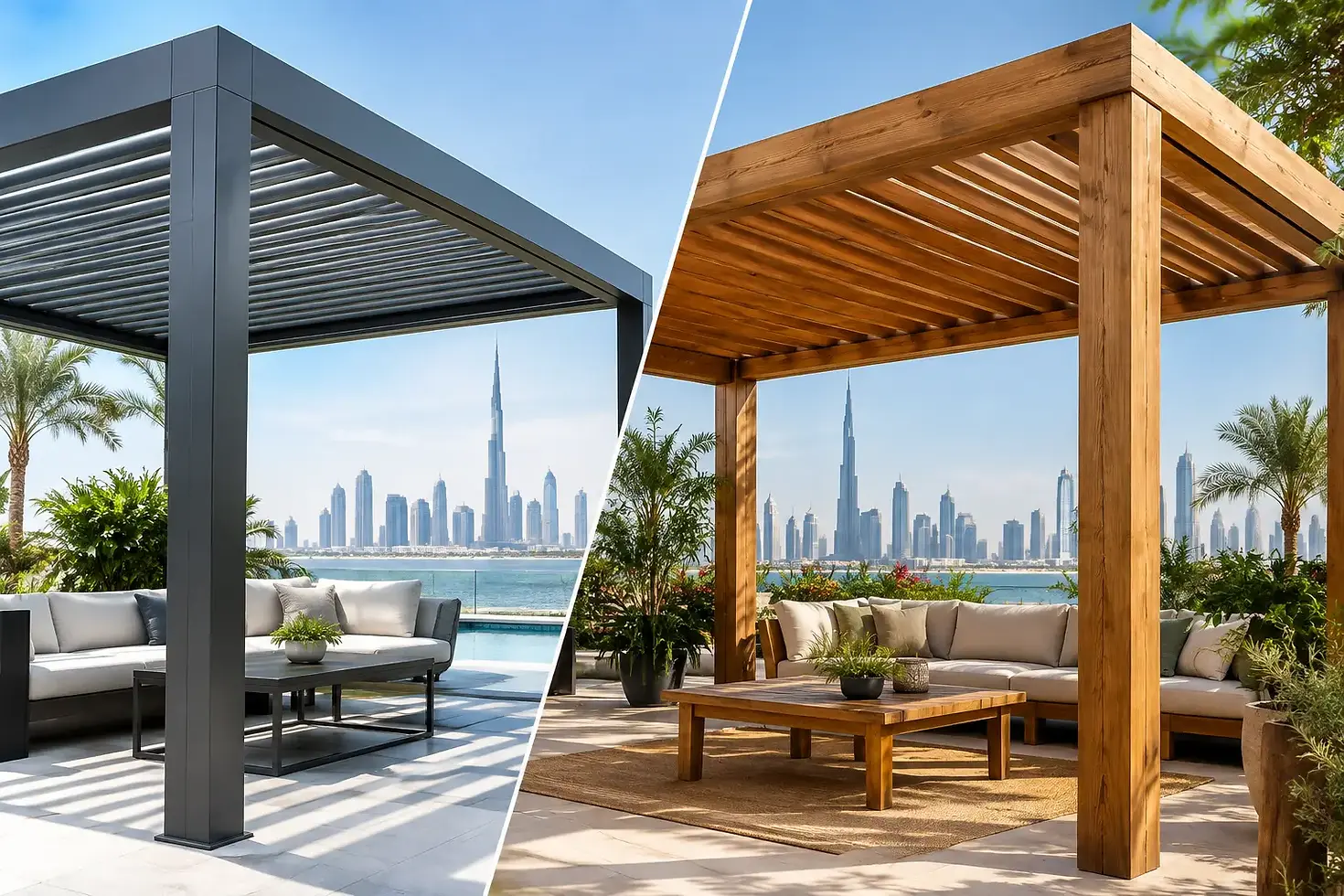
Aluminium Versus Timber for Dubai Pergolas

A pergola in Dubai is not simply a garden feature. It must stand comfortably through intense UV exposure, high summer temperatures, wind, airborne sand and the occasional heavy rainfall, while still looking refined beside the home. That is why the decision around aluminium versus timber deserves more attention than choosing a colour or roof style. The right material affects how much time you spend maintaining the space, how well it supports accessories, and whether your outdoor area remains a pleasure for family dinners and entertaining year after year.
Timber brings natural warmth that many homeowners appreciate. Aluminium brings engineering consistency, clean modern lines and low-maintenance performance. Neither material is automatically right for every villa, but Dubai's climate makes the practical differences especially clear.
Aluminium versus timber: what changes in Dubai?
The most visible distinction is aesthetic. Timber has grain, texture and an organic character that can suit traditional villas, landscaped gardens and homes seeking a softer, resort-inspired setting. It develops its own character over time, although that ageing is not always even in direct sun.
Aluminium is more architectural. It can be powder-coated in a wide range of colours, including finishes that complement stone, render, glazing and modern external joinery. A well-designed aluminium pergola does not need to feel cold or industrial. With carefully proportioned posts, integrated lighting, slatted screens, blinds and furniture, it can create a polished outdoor room that feels fully connected to the property.
The larger difference is how the materials react to the environment. Timber is a natural material that expands and contracts as temperature and moisture levels change. In the UAE, sustained heat and ultraviolet exposure can dry the surface, fade coatings and encourage splitting, checking or warping unless the timber is selected, detailed and maintained carefully. Aluminium does expand slightly in heat, but a properly engineered structure accounts for this movement and remains stable, straight and predictable.
Heat performance is about the full pergola system
Homeowners sometimes hear that aluminium becomes hot in the sun and assume timber must therefore be cooler. Aluminium is indeed a conductive material, so exposed metal surfaces can feel hot. However, the comfort of a pergola is determined far more by its roof design, shade coverage, airflow and solar control than by the frame alone.
An aluminium frame can support insulated roof panels, adjustable louvres, motorised retractable roofs, zip blinds and sliding glass doors with precise tolerances. These elements control direct sunlight and reduce glare where it matters: over seating, dining tables and doors leading into the home. For enclosed or semi-enclosed spaces, the right roof specification and glazing arrangement can also help manage solar gain.
A simple open timber pergola may look appealing, but it will not create meaningful midday protection without an additional shade solution. Fabric, reed screening or climbing plants can soften the sun, yet each brings its own maintenance and performance limits. The best approach is to decide first how you want to use the area in July and August, then choose the structure and roof around that requirement.
Maintenance: the cost that is easy to overlook
Timber pergolas need regular attention to preserve their appearance and structural condition. Depending on the species, finish and exposure, this can involve cleaning, sanding, sealing, staining or repainting. Connections should also be inspected, particularly where moisture can sit around fixings or where wood meets the ground, masonry or planter edges.
This is not necessarily a disadvantage for homeowners who enjoy maintaining natural materials and accept the patina that develops over time. High-quality timber, installed correctly, can be beautiful. The issue is that a pergola is often positioned in the most exposed part of the garden, where sun and dust are relentless. Deferred maintenance can quickly make an otherwise premium outdoor area appear tired.
Aluminium is generally much simpler to care for. A good-quality powder-coated finish needs periodic washing with mild soap and water to remove dust, salt residue and general garden debris. It does not require staining, and it will not rot, splinter or provide food for termites. For busy villa owners, that lower maintenance burden is often one of the strongest reasons to choose aluminium.
It remains essential to consider quality. Not all aluminium pergolas are equal. The grade and thickness of the profiles, corrosion protection, powder-coating process, drainage design, fixings and installation standards all influence long-term results. A light, poorly detailed structure can rattle, flex or allow water to escape where it should not. Material choice and workmanship must work together.
Strength, wind and accessory integration
A pergola becomes more valuable when it can adapt to different occasions. An open shaded terrace may be perfect for a winter barbecue, while a family lunch needs protection from low sun and an evening gathering benefits from lighting, fans or misting. These additions place demands on the frame.
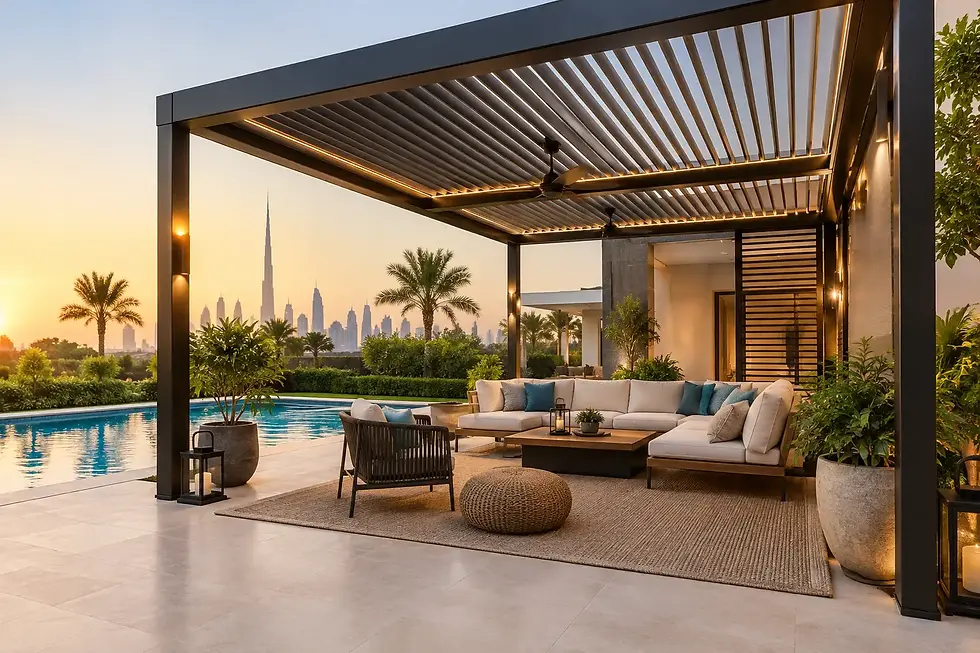
Aluminium systems are particularly well suited to integrated features because they are designed as coordinated assemblies. Motorised zip blinds can be recessed neatly into the structure, lighting cables can be concealed, and guttering can be incorporated into posts rather than added as an afterthought. Sliding glass doors, fixed side screens and motorised roof systems can also be planned from the outset, creating a more complete outdoor living space.
Timber can carry accessories too, but every opening, bracket and added load needs careful consideration. Over time, movement in the timber may affect alignment, especially with precision components such as blinds or glazed doors. This does not rule timber out, but it does make early, experienced design more important.
Wind resistance should never be assumed from photographs alone. The pergola must be sized for its location, span, roof type, anchoring conditions and the exposure of the plot. A free site survey allows these practical details to be assessed before a homeowner commits to a design.
Appearance and architectural fit
The decision is often less about whether timber or aluminium looks better and more about whether the design belongs to the house. A heavy timber frame can overwhelm a contemporary villa with slim glazing and pale stone finishes. Equally, a standard aluminium structure may feel too stark beside a traditional property unless its colour, roof form and surrounding materials are selected thoughtfully.
For a modern Dubai villa, aluminium often offers the greatest design freedom. Slimmer sightlines can preserve garden views, and a charcoal, bronze, white or wood-effect finish can be chosen to echo existing architectural details. The structure can also be tailored around an outdoor kitchen, dining zone, lounge seating or pool terrace rather than treating the pergola as a separate object.
Timber remains a compelling choice when its natural variation is central to the desired look. It can bring depth to a lush garden and pair beautifully with stone, planting and earthy finishes. Homeowners should simply allow for its maintenance programme and accept that natural ageing is part of the result.
Initial price versus long-term value
Comparing quotes only by square metre can be misleading. A basic timber shade frame and a bespoke aluminium pergola with integrated drainage, a motorised roof and side blinds are not equivalent products. The better comparison considers the intended use, expected service life, maintenance commitment and the cost of future additions.
Timber can appear economical at the beginning, particularly for a straightforward open structure. Yet periodic treatment, repairs, replacement of weathered sections and later adaptation for blinds or roofing can add cost over time. Premium hardwoods may also carry a higher initial price.
Aluminium may require a greater upfront investment, especially when engineered roof systems and automation are included. Its value lies in low ongoing maintenance, dependable geometry and its ability to support a finished outdoor room from the beginning. For many families, the real return is not only financial. It is having a shaded, elegant place that is ready for breakfast, children’s play, weekend gatherings and evening entertaining without a list of jobs before guests arrive.
Which material should you choose?
Choose timber if natural texture is the defining feature of your garden design, you are comfortable with ongoing care, and the structure will remain relatively simple. Choose aluminium if you want a precise, low-maintenance pergola that can incorporate adjustable shade, blinds, glazing, lighting and other outdoor-living features with a coordinated finish.
For homes exposed to Dubai's strongest sun, an aluminium system is often the more practical long-term choice, provided it is properly specified and professionally installed. At Euro Pergola Studio, the starting point is not a standard frame but how your family intends to use the space, from room-darkening needs and wind exposure to the location of an outdoor kitchen or dining table.
A thoughtful survey can turn the material question into a clearer design decision. Stand in the garden at the time you are most likely to use it, notice where the sun falls, and imagine the space with friends and family around it. The pergola should be chosen not only for how it looks on installation day, but for how confidently it supports those moments for years to come.

Comments