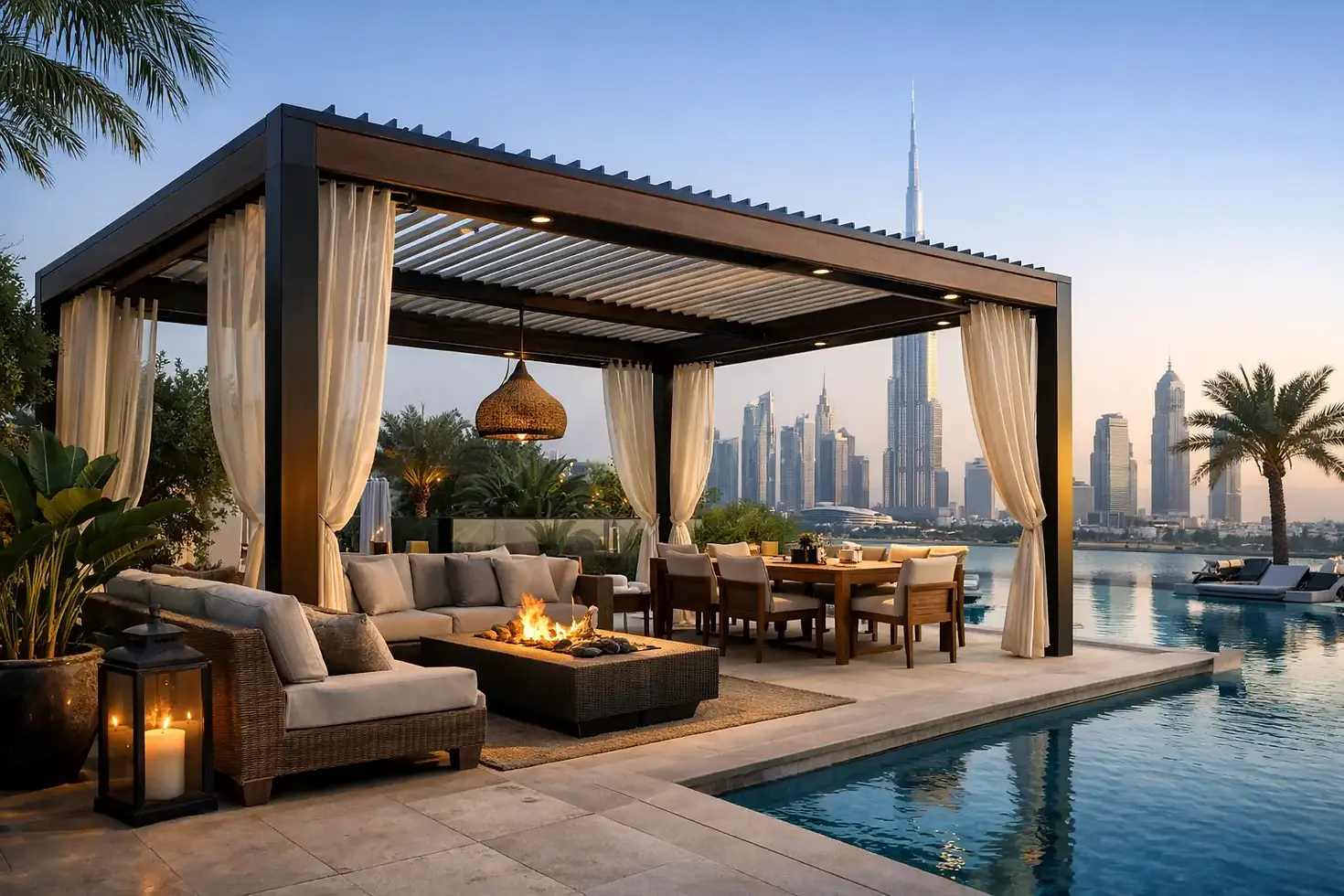
Pergola Price Dubai for a Bespoke Outdoor Room

A pergola is often the point at which a villa garden becomes genuinely usable. It creates a shaded setting for weekend lunches, children’s play, evening barbecues and family gatherings - but pergola price in Dubai is not a single fixed figure. The final investment depends on whether you need straightforward architectural shade or a fully enclosed, climate-conscious outdoor room designed around how your family lives.
For a made-to-measure aluminium pergola, projects can start from AED 300 per square metre. That starting point is useful for early planning, yet it should not be treated as the cost of every finished space. Roof operation, size, structural requirements, drainage, blinds, glass, lighting and the condition of the site all affect the specification and price.
What determines pergola price in Dubai?
The first factor is the type of pergola roof. A fixed aluminium roof is a strong choice where reliable, permanent shade is the priority. It suits homeowners who want a clean architectural extension of the villa with minimal moving parts, particularly over a dining terrace, poolside seating area or barbecue zone.
A motorised retractable roof or adjustable louvred roof offers a different experience. It allows you to choose open sky in pleasant weather, shade in strong sunlight and cover when rain arrives. This added flexibility requires motors, controls, engineered moving components and more detailed installation work, so it will usually sit at a higher level than a fixed structure. For many families, however, the ability to change the atmosphere of the space at the touch of a button is precisely what makes the additional investment worthwhile.
Size matters, but it is not the only measure of value. A compact pergola with integrated zip blinds, lighting and sliding glass doors may cost more per square metre than a larger open-sided canopy. Comparing projects purely by area can therefore be misleading. The better question is what the completed space will allow you to do for more months of the year.
Material and engineering should not be an afterthought
Dubai’s outdoor conditions are demanding. Intense UV exposure, sustained heat, dust, wind and occasional heavy rainfall place very different demands on a pergola than a mild European summer would. Aluminium is favoured for premium residential pergolas because it is durable, low-maintenance and capable of achieving a refined, contemporary finish without the deterioration associated with many timber structures.
Quality also lies beneath the visible frame. The thickness and profile of the aluminium, corrosion resistance of fittings, method of anchoring, water management and wind-load considerations all influence long-term performance. A lower initial quotation may omit details that are difficult to see on day one but costly to correct later, such as adequate drainage channels, properly finished flashings against the villa wall or a structure designed for the relevant span.
A proper site survey establishes what is possible before a price is confirmed. This includes checking access, existing paving, wall and slab conditions, nearby services, levels, drainage routes and the relationship between the pergola and surrounding doors or windows. It is the practical groundwork behind a result that looks considered rather than added on.
Pergola price in Dubai: choosing the level of comfort
The most significant cost difference often comes from the accessories that turn shade into an all-season entertaining area. These should not be viewed as minor extras. They determine privacy, glare control, airflow and how often the family will actually use the space.
Motorised zip blinds are a popular addition for villas exposed to low afternoon sun, neighbouring properties or windblown dust. Depending on the chosen fabric, they can reduce glare while retaining outward views, or provide stronger screening and room-darkening performance where required. The number of sides to be covered, opening dimensions and motorisation all influence the allowance.
Sliding glass doors take the concept further by creating a sheltered garden room while preserving views of the pool, landscaping or sky. They are particularly valuable when the pergola is intended for dining and entertaining through the hotter months or cooler evenings. Glass needs to be planned as part of the structure, not simply added at the end, because track details, drainage, thresholds and access routes must work together.
Cooling is another decision best made early. A fogging or misting system can make open-air seating more comfortable in dry heat, while fans, lighting and power points should be coordinated before the framework is installed. If your vision includes an outdoor kitchen, concealed services and sensible working clearances are just as important as the kitchen units themselves.
It depends on the setting. A shaded breakfast terrace may need only a fixed roof and discrete lighting. A large rear garden used for regular entertaining may benefit from motorised roofing, blinds, glazing, furniture and a kitchen planned as one coherent project. The second option costs more, but it avoids the piecemeal appearance and repeated disruption that can follow when separate contractors are brought in over several years.
How to compare pergola quotations properly
A useful quotation should make it clear what is included, rather than presenting one attractive headline number. Ask whether the price covers design, site measurement, supply, delivery, installation, foundations or fixing works where needed, drainage, electrical preparation and final finishing. You should also understand whether VAT is included and whether any exclusions are likely to arise once work begins.
Compare the roof specification closely. Is it fixed, retractable or louvred? Is motorisation included? What provision has been made for water run-off? Are gutters integrated into the design? For enclosed options, establish the glass type, track system and whether blinds are included on all relevant sides. A detailed specification gives you a far more reliable basis for comparison than a single line describing an ‘aluminium pergola’.
Visual integration deserves equal attention. The best pergolas complement the villa’s architecture through carefully selected frame colour, column placement, roof proportions and clean junctions with existing finishes. A structure may be technically sound yet still feel intrusive if it blocks key views, crowds an entrance or ignores the proportions of the house. Design expertise has a direct effect on the finished value of the project.
A sensible way to set your budget
Begin by defining the one outcome you cannot compromise on. It may be dependable shade above an outdoor table, a private family lounge, a rain-protected barbecue area or an enclosed space with improved heat and glare control. From there, decide which elements should be included from the outset and which can be sensibly added later.
It is usually worth planning electrical routes, drainage and structural allowances for future additions even if you do not install every accessory immediately. Retrofitting blinds, lighting, glass or a misting system can be possible, but it may be less tidy and more expensive than allowing for it during the original design.
At Euro Pergola Studio, the consultation and free site survey are intended to replace uncertainty with clear choices. Homeowners can discuss dimensions, preferred roof style, thermal considerations, room-darkening needs and special requests before receiving a transparent project proposal. With more than 165 completed installations through its Dubai-based affiliated businesses, the focus is on coordinating the details that make an outdoor space feel finished.
A well-priced pergola is not necessarily the lowest-priced one. It is the one that has been specified honestly for your property, your exposure to sun and wind, and the way your household intends to use the garden. Start with a site survey, share how you want the space to feel, and let the design be built around many years of relaxed family time outdoors.


Comments