How to Cool an Outdoor Patio in Dubai Heat

A Dubai patio can look beautiful at noon and still be too hot to use. The difference is rarely a single fan or a larger umbrella. When homeowners ask how to cool an outdoor patio, the answer is to control solar heat before it reaches the floor, furniture and people, then add carefully designed airflow and fine mist where it will make a genuine difference.
For a villa garden, terrace or poolside dining area, cooling should be planned as part of the outdoor room. A well-considered pergola, side protection, furnishings and cooling system work together to create a space for family lunches, evening barbecues and relaxed entertaining through far more of the year.
How to cool an outdoor patio by stopping heat first
Direct sun is the main source of discomfort. Once paving, aluminium furniture frames and glazing have absorbed heat all afternoon, they continue releasing it after the sun moves. That is why an outdoor area can remain unpleasant even when the air temperature begins to fall.
A permanent aluminium pergola provides the strongest starting point. Unlike a temporary parasol, a bespoke structure can be sized to the seating and dining layout, positioned around the sun path and engineered for local wind conditions. The goal is not simply to cast a patch of shade. It is to create a protected ceiling over the part of the garden where people actually gather.
A motorised retractable roof gives homeowners more control. Closed during the hottest hours, it blocks intense overhead sun. Open in cooler weather or after sunset, it restores the sense of an open garden. The right roof specification depends on orientation, the amount of existing shade and whether the patio is intended mainly for daytime use, evening dining or year-round entertaining.
Material quality matters here. Aluminium is well suited to the UAE because it is durable, low-maintenance and does not suffer the cracking, warping or repeated treatment associated with many timber structures. Yet the structure must still be thoughtfully designed. Proportions, drainage, fixings and roof detail all affect its long-term performance and the finished appearance of the home.
Control the low afternoon sun
Overhead shade alone cannot solve a west-facing patio. Late afternoon sun travels at a low angle, slipping beneath a roof and striking seating areas directly. It can also create glare across a television screen, dining table or sliding doors into the house.
Motorised zip blinds are a refined answer. They lower neatly from the pergola perimeter to reduce sun, glare and wind without leaving loose fabric to flap in changing conditions. Quality zip-guided systems create a taut, tailored edge that suits contemporary villa architecture far better than makeshift curtains or fixed screens.
The fabric selection should be discussed at survey stage. Different openness levels alter the balance between visibility, privacy, room darkening and airflow. A darker solar-control fabric may offer stronger glare reduction and a more sheltered feeling, while a more open weave maintains greater connection with the garden. Neither is automatically better. Families who use the patio for daytime meals may prioritise shade; those with landscaped views may prefer more outward visibility.
Sliding glass doors can add another layer of protection, particularly for patios used in the shoulder months or on windy evenings. They do not replace a cooling strategy in peak summer, but they help create a more adaptable outdoor room and can keep dust and wind away from furniture when required.
Use misting where it has room to work
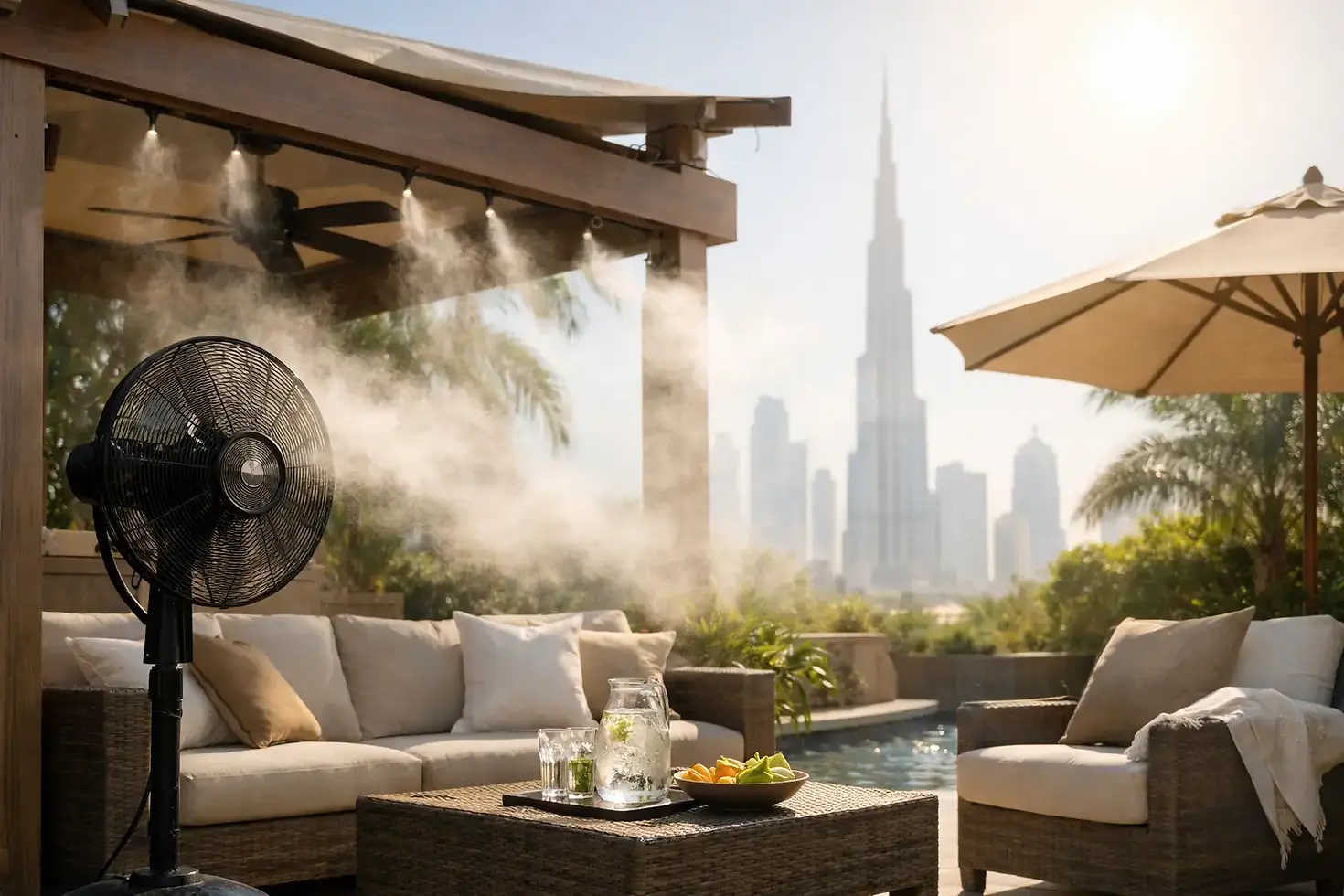
A professionally planned fogging or misting system can lower the perceived temperature considerably in a shaded, ventilated patio. It releases very fine droplets that evaporate in the air, drawing heat away before moisture settles. In the dry climate common across Dubai, this can be highly effective.
Placement is critical. Misting lines should sit at the pergola edge or above the occupied zone, not spray directly over a dining table, upholstered cushions or outdoor kitchen. The system should also be zoned, so a family can cool only the seating area in use rather than misting the entire garden.
More mist is not necessarily better. If nozzles are oversized, positioned too low or used in a confined area with little air movement, surfaces may become damp and comfort can decrease. Fine-nozzle systems, suitable filtration and sensible spacing are what separate a pleasant cooling effect from an improvised installation.
For patios beside a pool, misting needs even more careful coordination. The area already has elevated humidity near the water, so shade and air movement may provide the better first investment. A site survey can establish where the heat load is coming from and whether misting will deliver value in that specific location.
Create airflow without turning the patio into a wind tunnel
Ceiling fans are especially useful under a pergola because they move air across the skin and help the body cool naturally. They do not reduce the actual air temperature, but under shade they can make a noticeable difference to how comfortable the area feels.
Choose outdoor-rated fans with an appropriate blade span for the covered footprint. One undersized fan over a large dining zone will not reach the outer seats; several carefully placed fans are often quieter and more effective. Fan location should be coordinated with lighting, roof beams, misting lines and the dining table before installation, rather than added after the structure is complete.
In very exposed gardens, zip blinds can be partly lowered to direct breezes through the occupied area. In enclosed corners, keep at least one route for air to escape. Cooling works best when the patio feels sheltered, not sealed.
Reduce heat stored in surfaces and furnishings
The patio floor is frequently overlooked. Dark stone, dense porcelain and artificial grass can become uncomfortable underfoot after prolonged sun. Shade will reduce the problem, but material choice still matters where the paving extends beyond the pergola or catches morning and afternoon light.
Lighter-toned paving generally absorbs less solar heat, while a high-quality outdoor rug can soften the feel of a lounge zone. Avoid treating a rug as a cooling solution on its own - it should be suitable for outdoor exposure, easy to clean and placed where it will remain shaded for most of the day.
Furniture also affects comfort. Deep seating with breathable cushions, lighter-coloured upholstery and shaded dining chairs will encourage people to stay longer. Metal frames are durable, but armrests and tabletops should not be left exposed to direct sun. A complete patio design considers where each chair will sit at 1 pm as well as how the space looks in an evening photograph.
Planting offers useful support, particularly at the garden perimeter. Mature trees and layered greenery can shade boundary walls, soften reflected glare and improve the visual calm of the space. However, planting is a long-term complement to engineered shade, not a substitute for it. It requires irrigation, time and ongoing maintenance, and small plants will not immediately protect a large entertaining area.
Design around the way your family uses the space
The best cooling plan begins with a realistic brief. A patio used for breakfast needs protection from eastern sun; a barbecue and outdoor kitchen need thought around smoke, ventilation and cooking heat; a lounge used after school may need stronger western screening. If children play outside in the afternoon, shaded floor area becomes as important as the dining table.
It is also worth separating the garden into comfort zones. A covered dining area may need retractable roofing, side blinds and a fan. A quieter poolside corner may need only a smaller shade element and movable furniture. This approach avoids paying to mechanically cool areas that are used only occasionally.
For a polished result, coordinate the pergola, blinds, glass, lighting, cooling system, kitchen and furniture as one project. It improves both the visual language and the technical detailing, from concealed cable routes to correct drainage falls. It also avoids the familiar problem of multiple contractors trying to fit new components around work that was never planned for them.
Euro Pergola Studio designs and installs integrated outdoor living spaces for UAE homeowners, beginning with a free site survey and clear guidance on layout, thermal performance and material options. A tailored design can account for the direction of the sun, wind exposure, family routines and the architecture of the villa before any fabrication begins.
A cooler patio is not created by filling the garden with equipment. It comes from giving shade, airflow, screening and misting each a purposeful role - so your outdoor space feels composed, comfortable and ready whenever family and friends gather.


Comments